What Happened
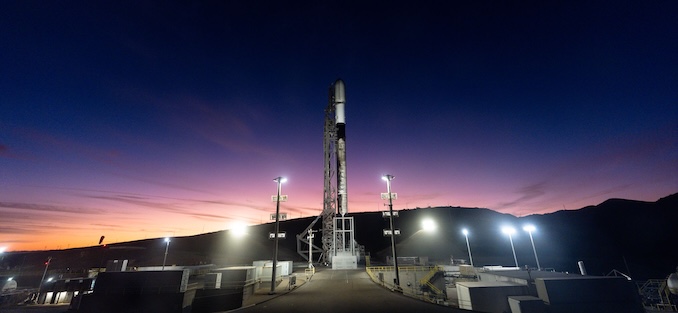
SpaceX expanded its global internet infrastructure with the successful launch of 27 new Starlink satellites. A Falcon 9 rocket lifted off from Space Launch Complex 4 East at Vandenberg Space Force Base in California at 6:47 p.m. PDT.
The rocket followed a southeasterly trajectory along the California coastline, offering a clear visual spectacle for evening skywatchers across the region. This flight marked the 81st dedicated Starlink mission of the year for the aerospace company, highlighting an unprecedented operational tempo.
Context and Background
The Falcon 9 workhorse has fundamentally reshaped the economics of spaceflight through rapid reusability. Traditional aerospace operations treated rocket boosters as single-use hardware, driving up the cost of access to orbit.
SpaceX’s recovery program, initiated years ago, routinely returns first-stage boosters to land or sea platforms. This mission leveraged California's Vandenberg base to insert payloads into high-inclination polar orbits, which are essential for achieving truly global Starlink coverage, particularly over the poles and remote maritime routes.
A Historic Booster Milestone
The central achievement of the mission centered on the Falcon 9 first-stage booster, designated B1093. This specific hardware completed its 17th successful flight to space and back.
B1093 carries an extensive flight heritage, having previously supported critical national security missions for the U.S. Space Force’s Space Development Agency, the Transporter-16 rideshare mission, and 13 prior batches of Starlink payloads.
About 8.5 minutes after liftoff, B1093 executed a precise, propulsive landing on SpaceX’s autonomous droneship, Of Course I Still Love You, stationed in the Pacific Ocean. This recovery marks the 225th successful landing on that specific vessel and the 662nd Falcon booster recovery overall.
Why It Matters
The routine reuse of rocket boosters directly impacts the global aerospace industry by slashing launch costs and turnaround times. For stakeholders, this reliability lowers the barrier to entry for scientific research, commercial payloads, and telecommunications expansion.
Furthermore, the rapid deployment of Starlink V2 Mini Optimized satellites enhances global broadband capacity, bridging the digital divide for rural and underserved communities that lack terrestrial fiber infrastructure.
What's Next
The 27 satellites deployed from this flight are currently using onboard ion propulsion to raise their operational altitudes, integrating directly into the growing orbital constellation.
Looking ahead, SpaceX maintains an aggressive launch manifest across both its East Coast pads in Florida and West Coast facilities in California. As engineers push individual boosters toward higher flight limits—aiming beyond 20 flights per booster—the data gathered from B1093 will inform safety margins and maintenance protocols for the next generation of heavy-lift architectures.