What Happened
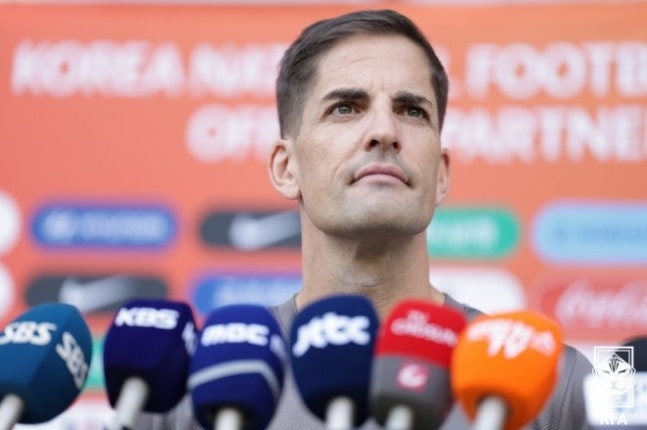
The South Korea national football team is stepping onto the pitch in Suwon to face Ecuador, kicking off a crucial four-match friendly window. This showdown marks the debut of South Korea's newly appointed manager, whose arrival has completely transformed the atmosphere around the squad.
Unlike previous managerial stints plagued by passive setups or disorganized approaches, the new coaching staff arrived with a massive database tracking roughly 1,700 Korean players. The initial 30-man roster reflects this analytical shift, featuring 12 K-League players—a significant jump from prior squads. Fresh faces, returning veterans like Song Min Kyu, and standout youngsters like 20-year-old Kim Min Su have all earned well-deserved call-ups based strictly on current form and tactical fit.
Why It Matters
The tactical overhaul is the biggest talking point heading into the Ecuador fixture. The new manager is implementing a fluid 4-4-2 structure anchored by the "EBO" (Estructura Básica Ofensiva) framework.
Out of possession, the team sets up in a compact mid-block or high press designed to force turnovers in central zones. In possession, it morphs dynamically into a 4-2-2-2 or 3-2-5 shape. Full-backs are no longer asked to act as isolated wide wingers—a major flaw under past regimes. Instead, they play supportive build-up roles, drawing out pressure and feeding dynamic attackers like Son Heung Min and Lee Kang In who operate fluidly in half-spaces.
This aggressive, synchronized high press demands intense physical output and tactical discipline, offering a stark contrast to the passive low blocks traditionally favored in domestic play.
What's Next
With four friendlies packed tightly between now and October—facing Ecuador, Uruguay, Venezuela, and Uzbekistan—squad rotation will be essential. European-based stars like Lee Kang In and Kim Min Su face severe travel fatigue following recent club fixtures, meaning domestic standouts and fresh legs will likely feature heavily against Ecuador.
Fans and analysts will be watching closely to see early glimmers of the new tactical identity. If the squad successfully executes the synchronized press and fluid positional interchanging, this autumn international break could mark the definitive dawn of a competitive new era for Korean football.