The Buzz Around Sequels: Does Toy Story 5 Diminish a Classic?
Let's be frank: When you talk about perfect film trilogies, very few stand the test of time without a misstep. The Godfather stumbled, Alien fizzled, and even genre titans like Star Wars or Lord of the Rings have seen their magic diluted by an endless stream of follow-ups. But then there was Toy Story. For years, it reigned supreme – a cinematic triumph universally hailed as flawless. Until, perhaps, it wasn't enough.
Now, as Toy Story 5 hits theaters, the question isn't just "Is it good?" It's "Does its very existence fundamentally alter the profound legacy of what came before?"
The Unmatched Legacy: Why the Original Toy Story Trilogy Was a Masterpiece
The original Toy Story trilogy wasn't just groundbreaking animation; it was a cultural touchstone. Kicking off in 1995, the first film didn't just invent computer animation as we know it; it earned an Oscar nomination for Best Screenplay, a rare feat for an animated feature. Its sequels in 1999 and 2010 continued the winning streak, each becoming global box office powerhouses, with Toy Story 3 shattering records as the first animated film to hit a billion dollars.
More Than Just Toys: The Profound Themes of Toy Story 1-3
But the financial success only tells half the story. These films resonated because they tapped into universal truths. They explored:
- Existential Angst: Buzz Lightyear's identity crisis, Woody's fear of obsolescence.
- Friendship and Loyalty: The unbreakable bond between the toys, despite their differences.
- The Inevitability of Change: Each film meticulously tackled a different stage of childhood and the painful reality of growing up.
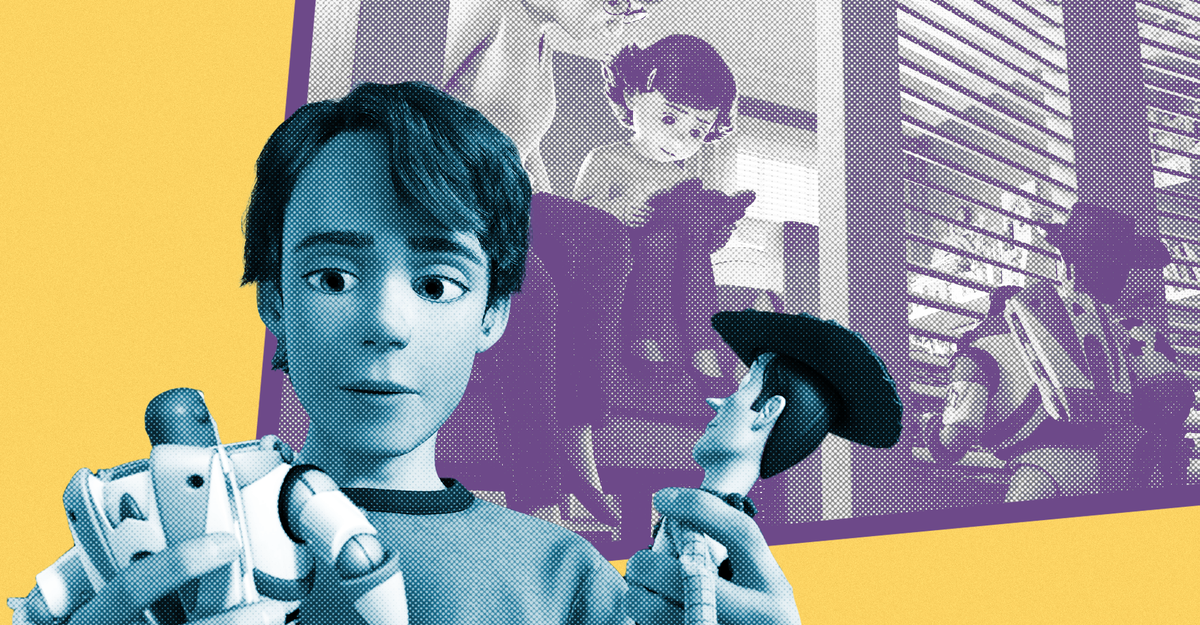
From Andy receiving Buzz and Woody's initial rivalry in the first film, to Woody facing the choice of eternal display versus finite love in Toy Story 2, the narrative arc was seamless. Toy Story 3 delivered perhaps the most emotional punch, confronting the ultimate farewell as Andy heads to college, leaving his beloved toys behind. That final shot of Woody and Buzz watching him drive away, Woody's "So long, partner," felt like an elegy – not just for Andy's childhood, but for a golden era of Pixar. It was the perfect, heartbreaking conclusion.
Toy Story 4: A Daring New Direction, or a Betrayal of Core Themes?
Then came Toy Story 4 in 2019. Financially, it was another billion-dollar success and an Oscar winner. Visually, it was stunning, pushing animation into photo-realistic territory. It even ventured into new philosophical territory, questioning the very nature of toy consciousness.
However, many fans (myself included) felt it undermined the core emotional drama of the franchise. The fundamental premise of Toy Story was that a toy's greatest purpose, its very meaning, lay in being played with and loved by a child – even knowing the heartbreak of eventual abandonment was worth it. As the villainous Lotso said in Toy Story 3, "No owners means no heartbreak." The trilogy showed the toys learning that the love was worth the heartbreak.
Toy Story 4, by having Woody choose to strike out on his own, to become a "lost toy" and define his own fate, essentially rewrote that central tenet. It imagined toys less as objects needing a child's love for purpose, and more as independent beings. In doing so, it chipped away at the powerful, poignant ending of Toy Story 3. For many, it felt non-canonical to the emotional journey.
Pixar's Perpetual Dilemma: Commercialism vs. Creative Integrity
The release of Toy Story 4 (and the subsequent critical flop of Lightyear) highlighted a growing concern: Pixar, once a bastion of original storytelling, seemed increasingly reliant on its established franchises. Of its four upcoming projects, three are sequels, with Toy Story 5 leading the charge.
It’s a vicious cycle: The original Toy Story trilogy became so successful because it was brilliant, but that very success now compels its continuation, even if it risks diluting the original's message. A story about the beauty of letting go of childhood toys has created a generation that simply can't let go of the franchise itself. And neither, it seems, can Pixar.
Toy Story 5: What the New Chapter Brings to Woody's World
Toy Story 5 reunites the gang, this time against an iPad-like antagonist named Lilypad. Early screenings suggest beautiful watercolor-style animation and a strong focus on Jessie, the energetic cowgirl introduced in Toy Story 2. There's even a moment so genuinely moving that it's designed to bring tears to the eyes of long-time fans.
Yet, despite its merits, the plot feels "overstuffed," the character development "rushed," and the themes, at times, "recycled." Anecdotally, it seems to resonate more with nostalgic adults than with a fresh generation of children. Is a sequel truly connecting if "parental chuckles far outnumbered kid giggles"?
A Hypocrite's Confession: Why We Keep Watching
I say all this as a confessed hypocrite. I owned nine Buzz Lightyear figures as a kid, wore the costume daily, and still get teary-eyed at "You've Got a Friend in Me." My parents even gifted me life-size replicas for graduation, my name inscribed on their feet, just like Andy's. My connection runs deep.
Andrew Stanton, director of Toy Story 5 and a key Pixar creative, argues, "Nobody's being robbed of their trilogy. They can have that and never watch another if they don't want to." He suggests that the world of Toy Story is meant to "embrace time and change," not stay "in amber." Perhaps he's right. Perhaps it's us, the adult audience, clinging to our toys.
If Toy Story 5 brings genuine joy to a new generation, who am I to begrudge it for messing with my perfect past? I can reconcile myself to the franchise's continuation, provided it doesn't come at the expense of Pixar investing in truly original stories.
Sometimes, visiting my childhood home, I see those graduation toys on my bookshelf. A pang of guilt hits me – they're on a shelf, the very place toys dread. But I also imagine a future, a child of my own, who might one day play with them. If she wants to make them her own, I will let them go. And maybe, just maybe, that's the real lesson Toy Story tried to teach us all along. Some things are perfect as they are, but life, and stories, must always move forward. The question is, at what cost?
/https://i.s3.glbimg.com/v1/AUTH_59edd422c0c84a879bd37670ae4f538a/internal_photos/bs/2026/V/a/zH7U3ESPA2q8cOoIIiDA/ap26231863258588.jpg)