What Happened
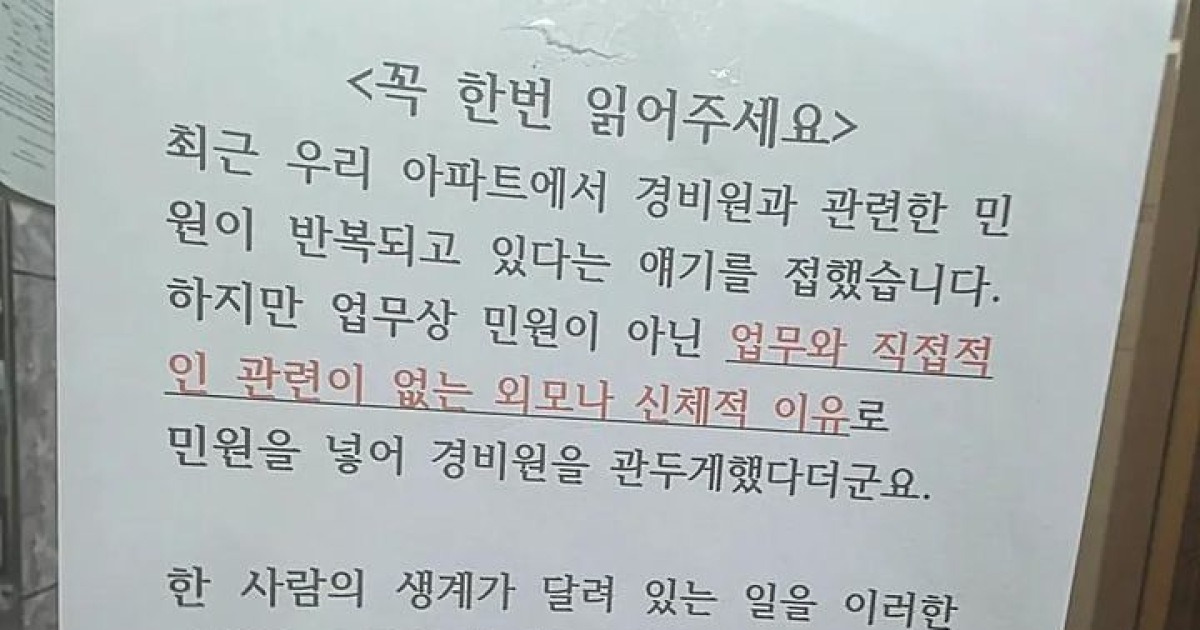
A residential apartment complex in Gyeyang-gu, Incheon, has become the center of public attention following the sudden departure of a security guard. A notice posted inside the apartment's elevator claimed that the worker was forced to quit due to recurring complaints from a resident regarding personal appearance and physical traits, rather than any failure in actual job performance.
The online community quickly picked up the story after photos of the elevator notice circulated widely across major South Korean forums. The anonymous author of the notice sharply criticized the behavior, labeling it a form of psychological violence and gapjil—a local term describing the abuse of power by individuals in positions of relative privilege over service workers. Shortly after, other residents joined in, leaving handwritten notes on community notice boards demanding that the offending resident apologize and reflect on their actions.
Background & Context
Conflicts between apartment residents and outsourced personnel, including security guards and cleaning staff, have a complex history in South Korea's high-density housing developments. Security workers are frequently employed on short-term contracts via third-party management companies, making them highly vulnerable to arbitrary complaints.
While South Korea enacted amendments to the Labor Standards Act to prohibit workplace harassment—extending protections to apartment workers against unreasonable demands—enforcement and cultural shifts remain uneven. Incidents where tenants weaponize management fees or service expectations to exert control over low-wage workers routinely trigger public backlash, as these workers often lack direct institutional protection against subtle forms of social exclusion and intimidation.
Why It Matters
The Incheon incident has reignited intense national debate surrounding the treatment of vulnerable service workers and the boundaries of tenant authority within multi-family housing complexes. Social media users and online commentators expressed deep frustration over how malicious or superficial complaints can severely impact an individual's livelihood and dignity.
For many observers, the case highlights persistent systemic gaps. Despite legal frameworks designed to curb workplace bullying, frontline personnel often hesitate to report abuse out of fear of contract termination or retaliation by powerful residents or management offices looking to avoid public scandals.
Management Response & Future Outlook
Following the rapid spread of the controversy online, the apartment’s management office stepped forward to address the circulating claims. Management firmly denied the allegations linking the resignation to appearance-based complaints, releasing a counter-statement asserting that the security guard left through standard, legitimate administrative procedures. According to management, rumors suggesting personal traits were a factor in the departure are entirely unfounded.
As the story continues to draw scrutiny, labor advocacy groups are calling for independent investigations into apartment management practices and stronger enforcement of anti-bullying protections. The incident underscores an urgent need for transparent grievance mechanisms in residential complexes to ensure that security personnel can perform their duties free from harassment, while holding abusive behavior accountable.
/https://i.s3.glbimg.com/v1/AUTH_bc8228b6673f488aa253bbcb03c80ec5/internal_photos/bs/2026/v/P/tKQdbTR3AqtgAZuDxXcQ/55575395570-2f08bbd5fb-k.jpg)