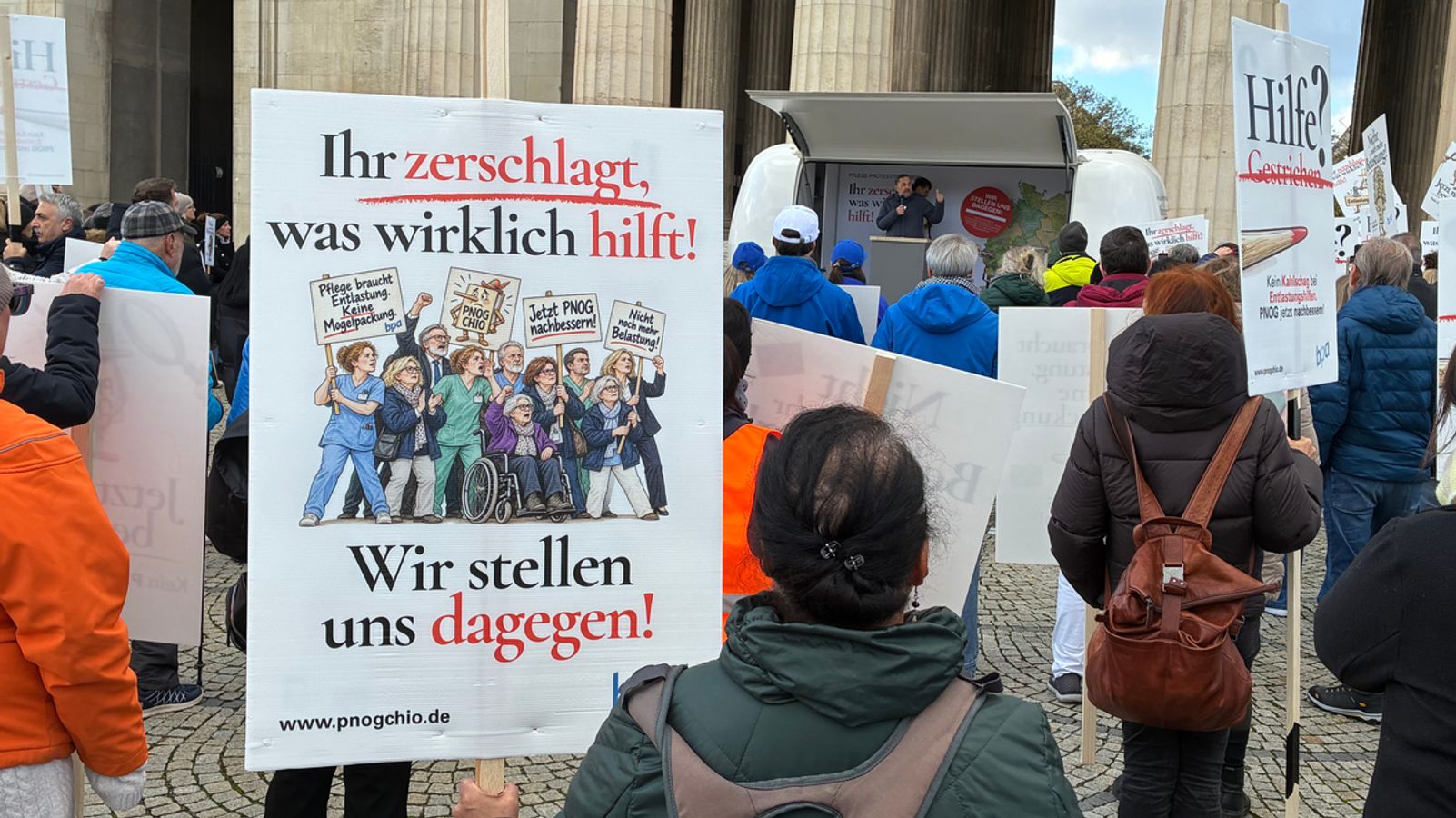
What Happened
Dozens of care providers, employees, and relatives gathered in Munich to protest the federal government's planned Pflege-Neuordnungsgesetz (PNOG). Armed with slogans like "Help? Canceled! – Jobs? Threatened!", demonstrators voiced severe concerns over how the upcoming legislative changes will reshape the funding and delivery of outpatient care services across Germany.
The Munich rally follows a massive demonstration in Berlin organized by the German Nursing Council, where roughly 3,300 people took to the streets. Major welfare organizations, including the Diakonie, are also pushing back, having recently collected over 30,000 signatures against the reform package.
Why It Matters
At the heart of the controversy are proposed structural changes to financial support mechanisms for both care recipients and home-care providers. Amin Kasri, head of the Bavarian branch of the Association of Private Social Service Providers (BPA), warns that restructuring could jeopardize the monthly 131-euro relief amount utilized by care recipients.
According to Kasri, this shift puts an estimated 10 percent of outpatient nursing jobs nationwide—roughly 50,000 positions—at immediate risk. Workers like Nina Latteier, a part-time housekeeping support worker in Langenzenn, fear their newly secured positions might not survive funding cuts if clients can no longer afford vital auxiliary services.
Important Context and Background
The legislative push for the PNOG stems from federal efforts to stabilize long-term care insurance finances amid rising demographic pressures. Germany’s aging population has placed unprecedented strain on existing budgets, driving lawmakers to seek structural efficiencies.
However, critics argue that the government's approach shifts the financial burden onto vulnerable households and service providers. Beyond institutional jobs, family caregivers are raising red flags. Elisabeth Kramler, who has cared for her neurologically ill mother for over 30 years, points to proposed changes regarding Verhinderungspflege (respite care) as a critical flaw. While the government argues that combining funding streams into flexible monetary budgets will simplify administration, critics counter that the bureaucratic hurdles will actually restrict access to temporary relief when family caregivers fall ill or desperately need a break.
What's Next
As legislative debates progress, mounting public pressure and industry pushback are forcing lawmakers to re-evaluate specific provisions within the draft bill. Trade unions, private care associations, and family advocacy groups are planning further regional actions ahead of the final parliamentary votes. Stakeholders hope these coordinated demonstrations will force amendments to protect both outpatient care infrastructure and the millions of households dependent on reliable state support.


