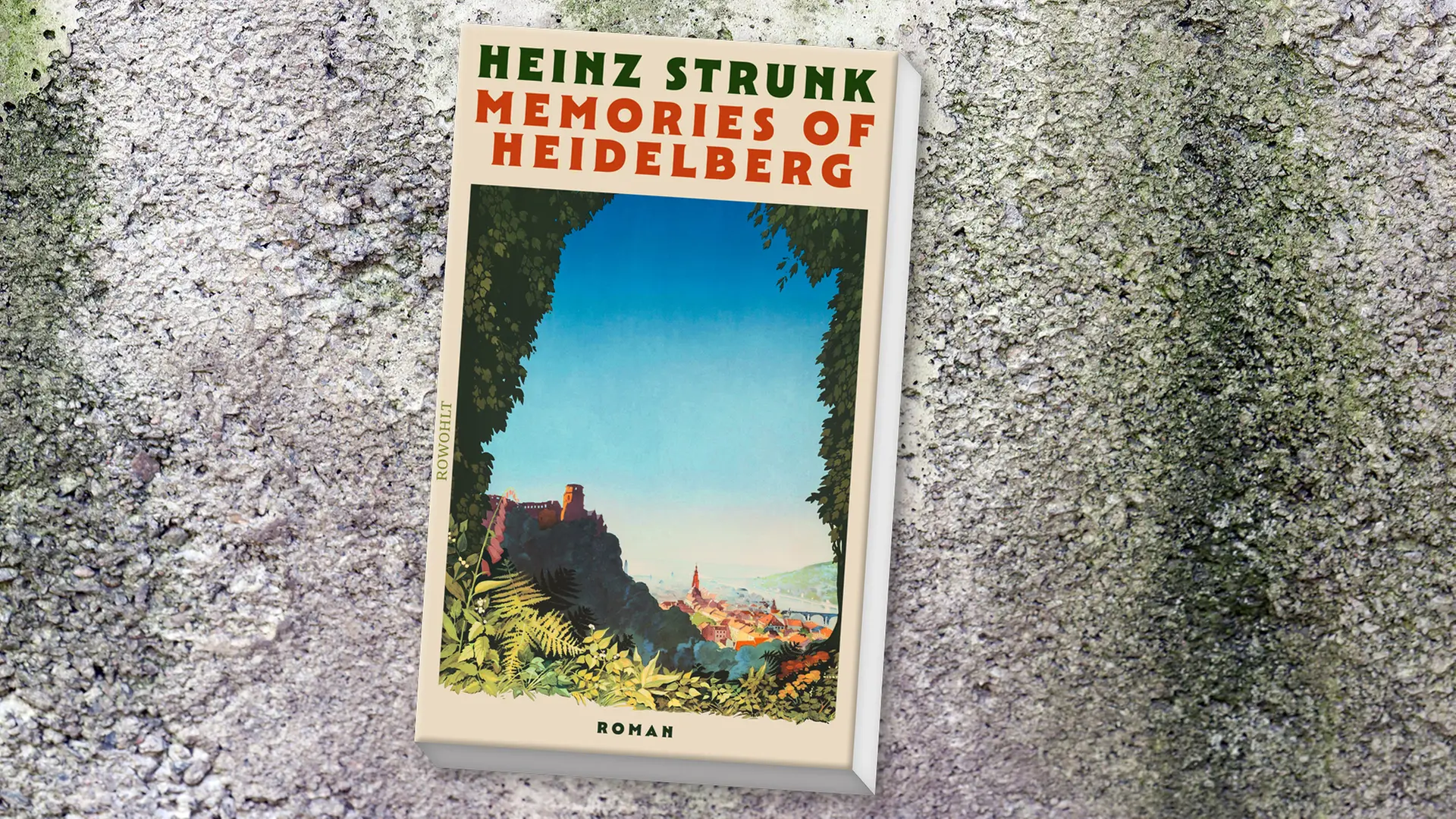
Heinz Strunk's Signature Style: Why 'Zauberberg 2' Delivers on Expectation
If you're familiar with German author Heinz Strunk, you already know what you're in for: a masterclass in the bleak, the uncomfortable, and the savagely hilarious. His latest novel, "Zauberberg 2," which he recently presented at the Kurhaus in Bad Bevensen, is no exception. Strunk consistently crafts narratives populated by disconnected characters navigating desolate settings, all observed through an unsparing introspective lens that gives no quarter to either his protagonists or his readers.
This isn't just about what happens; it's about the insidious spiral that everyday, banal moments can become. Strunk has a unique talent for transforming the mundane into a deeply disturbing, yet undeniably comical, catastrophe.
The Bleak Reality of Bertram & Isolde's Stagnant Marriage
Meet Isolde and Bertram, a couple from Oldenburg trapped in a seventeen-year marriage devoid of surprises – and, more critically, conversation. Their silence is a testament to a relationship that has run its course, leaving behind a vacuum of unspoken resentments and unfulfilled desires. A trip to Heidelberg, the city famously associated with "Memories of Happiness" (as a popular song goes), is meant to inject some fresh air into their stale union. Spoiler alert: it doesn't.
Bertram's Secret Death Wish: The Perilous Driving Game
The agonizing car journey itself sets the tone. Bertram, bored and craving a thrill he keeps strictly secret, has developed a terrifying game: he closes his eyes while driving at full speed. What began as three-second intervals has now escalated to eight. Miraculously, Isolde remains oblivious to her husband's morbid pastime, a chilling detail that underscores the cavernous disconnect between them. This perverse ritual of risk isn't just a quirky character trait; it's a stark metaphor for the couple's reckless disregard for their shared life, teetering on the edge of self-destruction.
A Vacation from Hell: The Abandoned Hotel and Italian Restaurant
Their "romantic" getaway is far from it. Isolde's mother, whose 80th birthday was the initial reason for the trip, lands in the hospital with a life-threatening kidney infection, turning sightseeing into somber hospital visits. The "Boutique-Hôtel & Spa Kurpfalz," an overpriced establishment, turns out to be deserted: no one at reception, no other guests, no housekeeping. From day one, the nearby Italian boat restaurant on the Neckar River becomes their default "local," simply because there are no other options.
But even this becomes another layer of torment. The restaurant staff treat them with increasing disdain, refusing indoor seating even in rain and cold. The food grows progressively more disgusting, yet inexplicably more expensive. Adding insult to injury, Peggy March's cheesy 60s "Heidelberg-Hymne" plays on a loop, its saccharine lyrics about happy memories becoming a constant, ironic backdrop to their unfolding misery. This song, the article notes, gives the book its melancholic title.
Strunk's Unflinching Gaze: Why His Characters Resonate So Deeply
Strunk's piercing observation of human foibles is precise and utterly convincing. He possesses an unerring knack for crafting dialogue and situations that cut to the bone. The pattern of every conversation between Bertram and Isolde is painfully familiar: short fuses, thin ice. He eats too much salt; she takes too long in the bathroom. And so on. This relentless cycle of petty grievances has led them to a mutual agreement of silence, especially since Isolde stopped wanting sex.
The emotional weight of this unspoken longing is palpable. Bertram numbs his physical yearning with excessive eating, a pathetic coping mechanism that Strunk renders with both brutal honesty and a hint of dark humor. Strunk is unparalleled in his ability to articulate the quiet desperation of lonely people and the excruciating awkwardness of everyday moments. You'll find yourself laughing within pages, only to be immediately ashamed by the bitter truth underpinning the humor. This unsettling ambivalence is Strunk's signature playground.
Beyond the Laughter: What 'Zauberberg 2' Asks About Our Own Relationships
Strunk isn't just an entertainer; he's a provocateur. In "Zauberberg 2," he satirizes the worst-case scenario of a loveless, monotonous marriage, presenting it as a cautionary tale. Reading it, you inevitably ask: Why do we stay in relationships that no longer serve us? Why are we drawn to the predictable – the same old restaurant, the same playlist, the rehearsed conflict? Why do we find change so incredibly difficult?
The novel is not a self-help guide, nor does it aim to be. Instead, Strunk draws us into an event-poor yet fast-paced whirlpool of catastrophe. Though only minor things "happen," the story gains momentum, turning repetition into a dramatic device and a pervasive, insidious form of torture. With imaginative twists and endearing losers, Strunk captures the essence of human stagnation.
Like with all his works, you'll hope his characters find salvation. But, as always, Strunk has other plans. The psychological terror that Heidelberg inflicts upon the couple eventually pushes Bertram to his breaking point, transforming him into "an animal." It's classic Strunk: linguistically exquisite, merciless, and dryly entertaining.
Why This Buzz Cares: The Lasting Impact of Strunk's Brutal Honesty
"Zauberberg 2" is more than just a book; it's a mirror. It forces readers to confront uncomfortable truths about their own lives and relationships. Strunk's genius lies in his ability to make us laugh at the very things that sting the most, ultimately compelling us to reconsider our choices. After reading about Isolde and Bertram, you might just find yourself wanting to be milder, happier, and more peaceful in your own life – if only to avoid their tragicomic fate.
/https://i.s3.glbimg.com/v1/AUTH_59edd422c0c84a879bd37670ae4f538a/internal_photos/bs/2026/V/a/zH7U3ESPA2q8cOoIIiDA/ap26231863258588.jpg)