Why Gen X's Car Choices Puzzle Younger Generations
Ever heard an elder bemoan, "they just don't make 'em like they used to"? For Generation X (born between 1965 and 1980), that sentiment hits different when it comes to cars. This is the generation that grew up resourceful and independent, largely offline, and perhaps a little cynical—traits that deeply informed their automotive tastes. And let's be clear: those tastes are often lost on younger generations, who've come to expect comfort, tech, and automated assistance.
Modern vehicles are veritable transit pods, brimming with digital displays, electronic nannies, and the gentle hum of efficiency. But Gen X's beloved machines? They were loud, gloriously inefficient, unapologetically fun, and demanded a human connection. We're talking about cars that were an extension of the driver, not a digital co-pilot. This isn't just about nostalgia; it’s about a fundamentally different philosophy of what a car should be.
The Analog Appeal: Driver Engagement Over Digital Distraction
For Gen X, the thrill wasn't in touchscreens or automated lane-keeping; it was in the direct, unadulterated feedback from the road. The sensation of a manual gear shift, the unassisted steering, the mechanical roar of an engine—these weren't inconveniences, but integral parts of the driving experience. This stark contrast explains why the cars that defined a generation often elicit blank stares from those who followed. It's not just a car; it's a time capsule to an era where driving was less about the destination and more about the journey, felt through every fiber of your being.
Unpacking the Cult Classics: Five Gen X Rides Millennials Miss
Let's buckle up and explore five iconic Gen X rides that embody this spirit—cars that younger generations might just struggle to wrap their heads around.
The Volkswagen Mk1 GTI: Raw Driving Purity Over Modern Power
Today's Volkswagen GTI is undeniably a hot hatch hero: 241 horsepower, 273 lb-ft of torque, 0-60 in under 6 seconds, and loaded with modern amenities. It’s won countless accolades, and for good reason. But offer a Gen Xer a choice between a brand-new 2026 model and a pristine 1983 Mk1 GTI, and prepare to watch the original win, almost every time.
Why the Mk1 GTI Still Captivates Gen Xers (and Confuses Younger Drivers):
- Underpowered, Over-Engaged: The naturally aspirated four-pot of the 1983 model is a whopping 151 horsepower and 168 lb-ft of torque down on its modern counterpart. Its 0-60 time is… leisurely. Yet, slide behind the wheel, and the magic happens.
- Featherlight Agility: Weighing a mere 2,100 pounds (compared to the modern 3,300+ lb porker), and riding on "comically small" 14-inch tires, the Mk1 is pure, unadulterated tossability. It's light, direct, and demands you drive it.
- The Manual Mandate: With VW phasing out manual transmissions, the Mk1's obligatory stick shift is a relic. For Gen X, this wasn't a chore; it was the essential interface for total car-to-driver engagement. It's raw, devoid of frills, and a testament to simplicity that’s hard for the gadget-savvy to grasp.
Jeep XJ Cherokee: The Goonies' Unsung Hero & Off-Road Icon
The Cherokee nameplate lives on, but the modern version is a smooth, unibody crossover. The Gen X favored XJ Cherokee, however, was a different beast entirely. It was body-on-frame, rugged, and unrefined—a true utility vehicle that prioritized capability over comfort.
Decoding the XJ Cherokee's Enduring Appeal for Gen X:
- Rugged Reliability & Simplicity: Its body-on-frame construction wasn't for comfort; it was for genuine off-road prowess. Inside, manual window cranks were standard, and under the hood, a "bulletproof" straight-6 engine was a mechanic's dream—easy to access, easy to fix.
- The "Goonies" Connection: For many Gen Xers, the XJ wasn't just a car; it was the anti-hero vehicle in the 1985 cult classic, "The Goonies." This pop culture tie-in elevates its status beyond mere transportation, making it a symbol of adventure and 80s rebellion.
- Demanding Driver Skill: With no traction control and a long, truck-like manual shifter, the XJ demanded critical thought from its driver. Whether burning rubber in 2WD or conquering terrain in 4WD, it put you in control, a stark contrast to today's automated safety nets.
Merkur XR4Ti: Ford's Forgotten European Oddball That Roared
Ford's attempt to bring a European Sierra to American shores resulted in the Merkur XR4Ti, sold briefly from 1985 to 1989. Its name ("mare-core," not "mer-ker") was as bewildering as its design, featuring a peculiar biplane rear spoiler. For many younger drivers, the brand "Mercury" itself might be a historical footnote, let alone its oddball German offshoot.
Why the Merkur XR4Ti Was a Hidden Gem for Savvy Gen X Drivers:
- Performance Prowess: Despite its obscure branding and quirky looks, the XR4Ti was a genuinely cool sports sedan. Boasting rear-wheel drive, a chassis tuned with input from legendary Jackie Stewart, and a 175-horsepower 2.3L turbocharged four-cylinder, it was faster off the line than a period Ferrari 308 and offered with a 5-speed manual.
- Distinctive Design: It was unlike anything else on American roads, then or now. Its unique European aesthetic made it stand out, even if some mistook it for a custom build rather than a factory offering.
- Rarity and Esotericism: Its limited production and short lifespan make it a truly rare sight today, contributing to its mystique. For Gen Xers who appreciated automotive esoterica, the XR4Ti was a badge of honor.
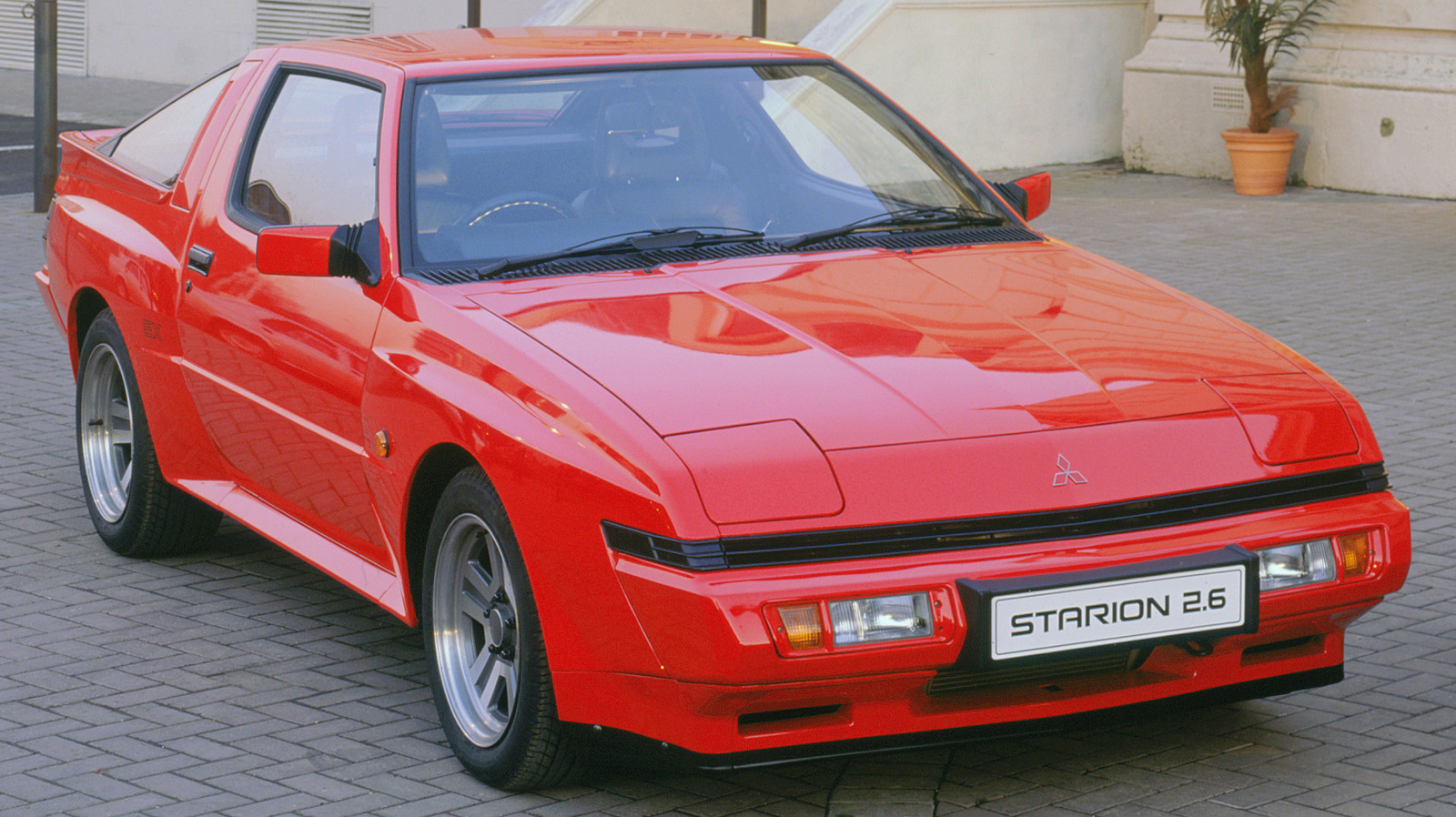
Mitsubishi Starion & Chrysler Conquest: The Starquest Twins' Turbocharged Legacy
Mitsubishi and Chrysler, once powerhouses of cool cars, jointly created the Starion and Conquest twins—affectionately known as the "Starquest." These badge-engineered coupes were quintessential 80s turbo monsters, but their rarity and unique names often leave younger generations puzzled.
The Starquest Twins: A Flashback to 80s Turbo Power and Pop-Up Headlights:
- Iconic 80s Aesthetic: The Starquest perfectly encapsulated the era: fat rear tires, pop-up headlights, pronounced boxed fender flares, automatic seatbelts, and that glorious "TURBO" badge everywhere. It was pure, unapologetic 80s cool.
- Hammer-Like Boost: These cars delivered a visceral, old-school turbo experience. The boost didn't build; it hit you like a hammer, making for an exhilarating, if somewhat unrefined, surge of power.
- Cult Status Despite Rarity: With fewer than 35,000 units sold over seven years, the Starquest twins were never common. Their distinctiveness, combined with the "DeLorean-like" aesthetics, solidified their cult status among those in the know. If you know, you know (IYKYK).
Ford Crown Victoria: The Last V8, Body-on-Frame American Sedan
You simply can't buy a brand-new, rear-wheel-drive, body-on-frame, V8-powered full-size sedan in America anymore. But for over 30 years, Ford's Crown Victoria filled that niche, becoming the undisputed king of police cruisers and taxi fleets. Specifically, the 1992-2008 model—the "aero" body style—is etched into the Gen X psyche.
The Crown Vic: More Than Just a Cop Car for Gen X Drivers:
- Bulletproof Reliability & V8 Power: Known for its legendary durability, the Crown Vic's simple V8 engine was abundant and cheap to repair. It was a workhorse, a tank, and could take a beating, appealing to a generation that valued robustness.
- The Intimidation Factor: The distinctive headlight signature of a Crown Vic still strikes fear into the hearts of many Gen X drivers, a Pavlovian response to years of seeing them in the rearview mirror. This shared cultural experience is unique to this generation.
- Spacious & Practical: With room for six (thanks to the front bench seat!) and a big, cushy ride, it was the epitome of practical American sedan comfort. While scoffed at for its 17 mpg city fuel economy, its longevity and low repair costs often outweighed the gas bill.
- An Endangered Species: In an era dominated by crossovers, the Crown Vic represents a bygone era of straightforward, robust American automotive engineering. For younger generations, it might just be "that old cop car" or a "clapped-out Uber ride," missing the profound cultural significance and engineering philosophy it embodies.
Beyond Horsepower: What Gen X's Favorite Cars Really Represent
These five cars aren't just vehicles; they're cultural touchstones for Generation X. They represent an era of unapologetic mechanical simplicity, where the driver was an active participant, not a passive passenger. They speak to a time before everything was digitized, automated, and sanitized.
The Enduring Allure of Mechanical Simplicity and Driver Skill
The misunderstanding from younger generations isn't a slight; it's a symptom of how vastly different the automotive landscape has become. Gen X's beloved machines were often light on power but heavy on engagement. They demanded skill, rewarded understanding, and offered a raw, unfiltered connection to the road. This ethos—where the machine is an extension of the self, rather than a smart device—is a fundamental part of the Gen X identity. And as the automotive world continues its march towards autonomy, these analog relics will only grow in their symbolic importance, serving as a reminder that sometimes, less tech truly means more driving.
/https://i.s3.glbimg.com/v1/AUTH_59edd422c0c84a879bd37670ae4f538a/internal_photos/bs/2026/V/a/zH7U3ESPA2q8cOoIIiDA/ap26231863258588.jpg)