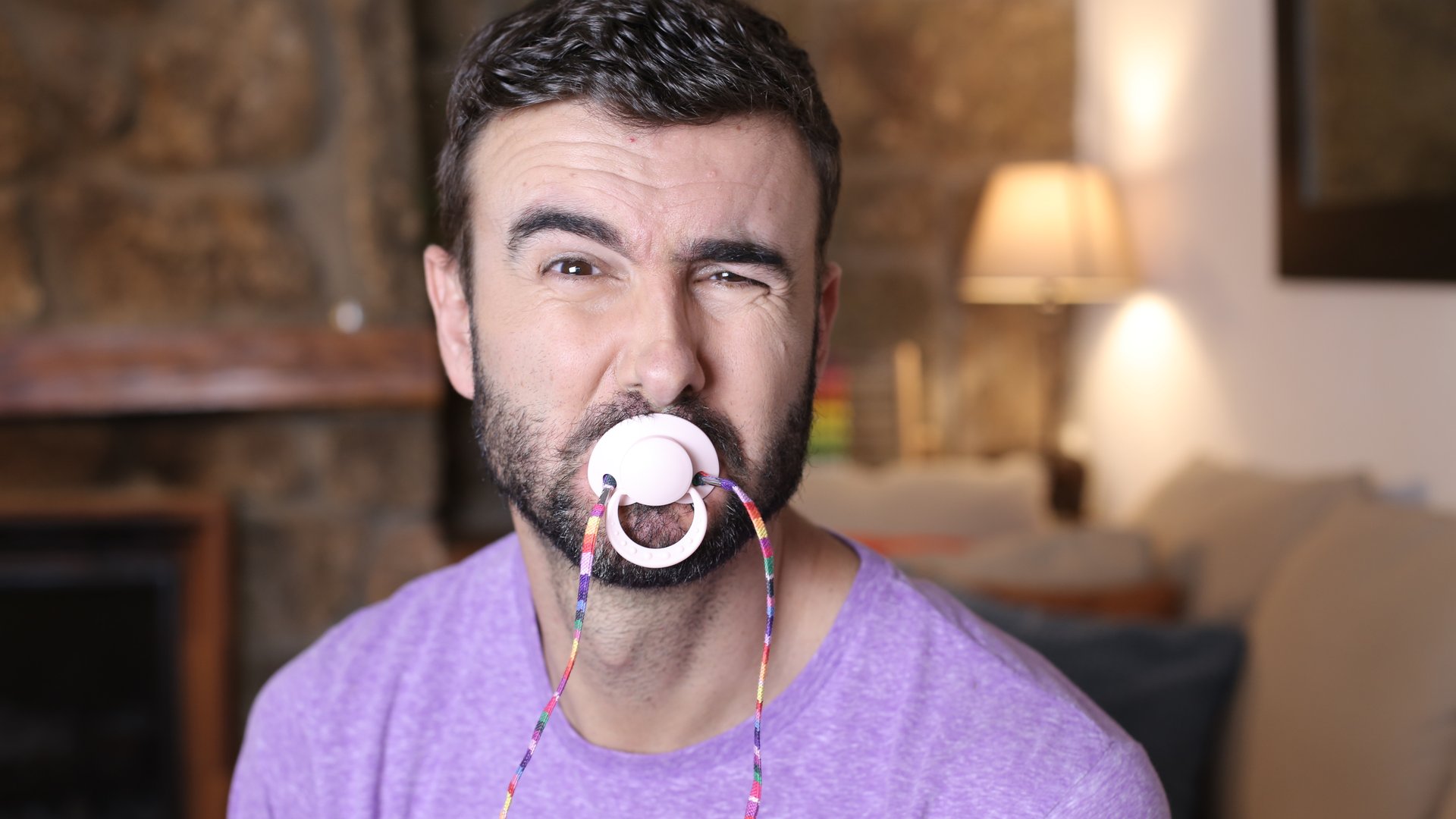
Reality TV just delivered its latest head-scratcher, and it's got everyone asking: Are pacifiers strictly for babies anymore?
The buzzing German show Villa der Versuchung (Villa of Temptation) threw a curveball with the revelation that celebrity Jenny Elvers, at 54, uses a pacifier to help her sleep. What might seem like a bizarre stunt for ratings quickly proved to be her genuine, personal coping mechanism. She reportedly transitioned from thumb-sucking to a pacifier, finding it a genuine aid for relaxation and sleep.
But Elvers isn't alone. Her on-screen confession isn't just a quirky habit; it's a spotlight on a rapidly growing, somewhat peculiar social media phenomenon.
Unpacking the #AdultPaci Trend: From Reality TV Star Jenny Elvers to Viral TikToks
Here at WhyThisBuzz, we've been tracking the digital murmurs. Elvers' habit syncs perfectly with the #adultpaci trend dominating platforms like TikTok and its Chinese counterpart, Douyin. Millions of clips showcase young adults openly using pacifiers, sharing their experiences, and advocating for their calming benefits.
This isn't just an online fad; it's a market opportunity. The commercial world has swiftly responded, ushering in an entirely new product category: adult pacifiers. These aren't your average baby binkies; they feature larger shields and designed for a better fit in an adult mouth. Advertisements tout them as soothing companions for stress, reliable sleep aids, and even promise to reduce snoring, improve sleep quality, or assist with quitting smoking.
Sounds almost too good to be true, right?
Are Adult Pacifiers a Miracle Cure? Separating Fact from Viral Fiction
Here’s where WhyThisBuzz cuts through the noise: For all the compelling marketing copy and enthusiastic testimonials, there is currently no robust scientific evidence to back these claims.
- Stress Reduction? No peer-reviewed studies confirm adult pacifiers reduce stress.
- Sleep Aid? While some users report feeling relaxed, scientific research hasn't established them as an effective sleep treatment.
- Snoring & Smoking Cessation? Despite the promises, these products are not recognized scientifically as effective treatments for snoring or as an aid to quit smoking.
It’s crucial to understand that anecdotal evidence, while personal and valid for individuals, doesn't equate to scientific proof of efficacy for the wider public.
The Psychological Comfort Zone: Why Adults Are Drawn to Pacifiers
So, if there's no scientific backing, why do so many adults, including Jenny Elvers, find comfort in a pacifier? The answer lies deep in human psychology.
The Power of Early Conditioning: For infants, sucking isn't just about nutrition; it's a fundamental self-soothing mechanism. This action is deeply ingrained from birth with feelings of comfort, security, and relaxation. It's a primal link to feeling safe and content.
Even in adulthood, many people unconsciously use oral actions to relieve tension. Think about chewing on a pen, biting nails, or stress-eating. These are all attempts to channel inner unrest through the mouth. Nuzzling a pacifier could simply be a more direct, perhaps more effective, manifestation of this same coping strategy.
Berlin-based psychotherapist Dr. Dirk Stemper suggests this behavior could be interpreted as a return to an early-learned form of self-soothing. When under pressure, individuals might instinctively revert to behaviors that provided comfort and security in earlier life stages. This psychological explanation offers insight into why it feels good, even if it doesn't offer a proven cure for underlying issues like chronic stress or insomnia.
Beyond the Comfort: What Are the Dental Risks of Regular Adult Pacifier Use?
While the psychological comfort is understandable, adopting a baby accessory long-term isn't necessarily without consequences. Especially with regular use, the impact on adult teeth and jaw structures needs consideration.
Even in children, prolonged pacifier use is known to potentially alter tooth and jaw alignment. While an adult jaw is no longer in the same growth phase, the consistent pressure from a pacifier could still influence:
- Tooth Position: Shifting teeth out of their natural alignment.
- Bite Issues: Affecting how the upper and lower teeth meet.
- Jaw Discomfort: Leading to pain or difficulties when chewing or opening the mouth.
Currently, research on the specific dental and oral health risks of adult pacifier use is extremely limited. The exact extent of potential damage likely depends on factors like frequency and duration of use. However, it's a significant consideration that current trends are outpacing scientific investigation.
The WhyThisBuzz Takeaway: The #adultpaci trend, highlighted by Jenny Elvers, is a fascinating intersection of celebrity culture, social media virality, and deep-seated human psychology. While the appeal of instant comfort is undeniable, it's crucial for consumers to distinguish between personal coping mechanisms and scientifically proven solutions. For now, if you're considering an adult pacifier, understand its potential comfort benefits are largely anecdotal, and its long-term dental risks remain largely unstudied. Choose comfort wisely.